
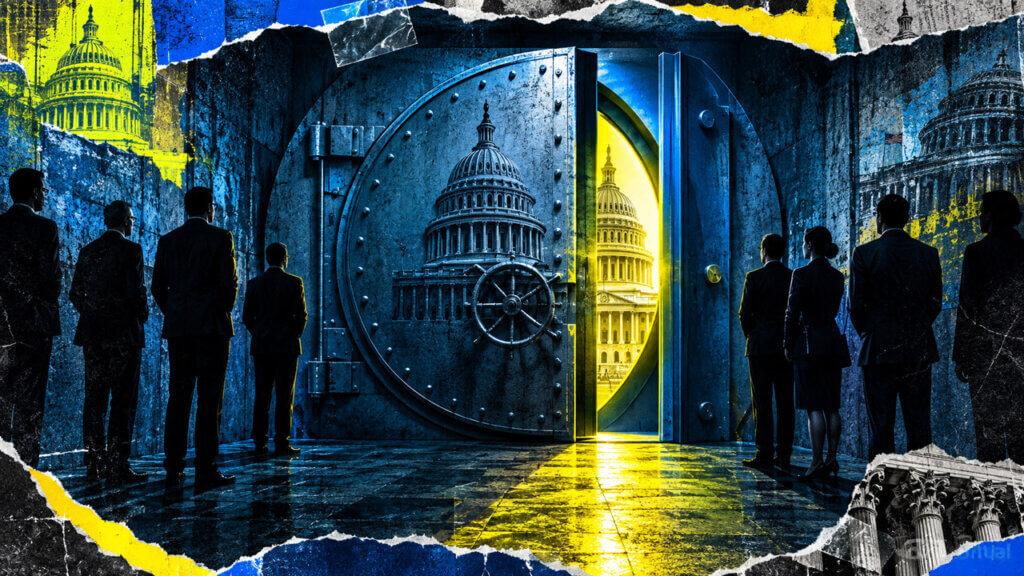
The US Senate is running out of time to advance the CLARITY Act, but Bitwise says a decisive failure could eventually remove an obstacle weighing on crypto markets.
Senate leaders face a narrowing window on Wednesday to file for cloture if they want to preserve a chance of voting on the digital asset market structure bill before lawmakers leave Washington.
The Senate’s scheduled state work period begins Aug. 10, while Bitwise Chief Investment Officer Matt Hougan said lawmakers are expected to leave Friday and return Sept. 14.
The Senate’s Wednesday floor schedule was focused on government funding legislation and did not list the CLARITY Act, leaving supporters with only hours to secure a procedural path forward.
Hougan said passage remains the best outcome for the industry and could start a new crypto bull market. However, he argued that a clean collapse in the bill’s near-term prospects could prove better for prices than months of unresolved negotiations.
“The best thing that can happen if Clarity doesn’t pass this week is that the Polymarket odds break solidly lower,” Hougan wrote in a Tuesday memo, adding that a drop into the teens could allow markets to put the uncertainty behind them.
He said crypto prices could briefly wobble before conditions emerge for a rally in the fall.
CLARITY Act uncertainty keeps investors waiting
Hougan’s case rests on the view that professional investors are holding back capital while the bill’s fate remains unresolved.
Those investors may be reluctant to increase their crypto exposure before a potentially market-moving legislative defeat, he said. A steep decline in passage expectations would allow them to stop waiting for Congress and begin assessing the industry under the regulatory structure already taking shape.
That creates an important distinction in Hougan’s outlook. Failure would not automatically be bullish. The potential catalyst would come from removing uncertainty after investors fully price in the setback.
The alternative could be more damaging. Hougan expects the bill to enter what he called a “walking dead” state if senators miss this week’s deadline, with supporters continuing to discuss possible votes in September, during a post-election session or through a year-end legislative package.
That prolonged campaign could keep the same political risk hanging over the market for months.
Data from Polymarket shows that crypto traders placed the probability of the bill’s enactment in 2026 at just 14%, down from over 80% in February.
A bill years in the making
The CLARITY Act would establish a federal framework for digital commodities and divide oversight responsibilities between the Securities and Exchange Commission (SEC) and the Commodity Futures Trading Commission (CFTC).
The House passed the measure 294-134 in July 2025. The Senate Banking Committee approved an amended version 15-9 in May, sending it toward the floor after months of negotiations.
Supporters say the legislation would replace fragmented oversight with clearer rules for determining when digital assets fall under securities or commodities laws.
An updated version released in July also sought to resolve one of the largest political obstacles to passage by barring certain officials, including the president, vice president and some members of Congress, from issuing or sponsoring digital assets until January 2029.
The restriction was intended to address Democratic concerns that President Donald Trump and other officials could profit from crypto ventures while influencing the rules governing the industry.
Still, the concession has not unlocked enough Democratic votes to move the bill through the Senate.
Critics say the provision would leave officials free to retain existing assets, trade tokens they did not issue and continue receiving some income through affiliated companies or licensing arrangements. Enforcement would be left to the Justice Department, while state attorneys general would be expressly prevented from bringing cases.
Sen. Elizabeth Warren, the committee’s ranking Democrat, said the new language contained “massive loopholes” and would not prevent Trump from continuing to profit from existing or newly structured crypto ventures.
She also argued that the broader bill would weaken investor protections, create risks for the financial system and leave gaps that criminals could exploit through decentralized finance platforms.
Republicans reject those claims, arguing that the bill preserves the SEC’s antifraud powers, subjects major crypto intermediaries to Bank Secrecy Act requirements and establishes disclosure and resale restrictions for digital assets.
However, with Democrats still demanding stronger ethics, investor-protection and national-security provisions, the July revision has not produced the votes required to bring the legislation across the Senate’s 60-vote threshold.
SEC offers a fallback path
Hougan said a congressional delay would not stop regulatory changes because the SEC could address many of the same questions through agency rules.
He cited SEC Chair Paul Atkins, who recently said the commission was prepared to develop rules covering issues included in CLARITY. Hougan said those measures could initially be more favorable to crypto companies than a bipartisan law shaped by negotiations in Congress.
However, agency rules would be less permanent because a future administration could appoint an SEC chair who seeks to reverse them, while legislation would provide a more durable division of regulatory authority.
Hougan nevertheless argued that adoption by major financial companies would make a broad reversal increasingly difficult. He pointed to the expansion of spot crypto exchange-traded funds, tokenization projects, stablecoin payment systems and blockchain initiatives by established financial firms.
He compared the potential delay with the failed US telecommunications overhaul of 1994. At the time, the Senate did not approve the legislation, but internet companies and websites continued expanding before Congress passed a broader telecommunications law in 1996.
His argument leaves the market with two potentially bullish outcomes and one difficult middle ground. An immediate passage could produce a repricing based on durable federal rules. But a decisive defeat could clear away a risk that has kept investors waiting.
A narrow miss followed by months of speculation would preserve the uncertainty that Hougan believes has become the greater short-term burden.
The post Senate has hours to advance CLARITY, but Bitwise says missing deadline sets up a crypto rally appeared first on CryptoSlate.