
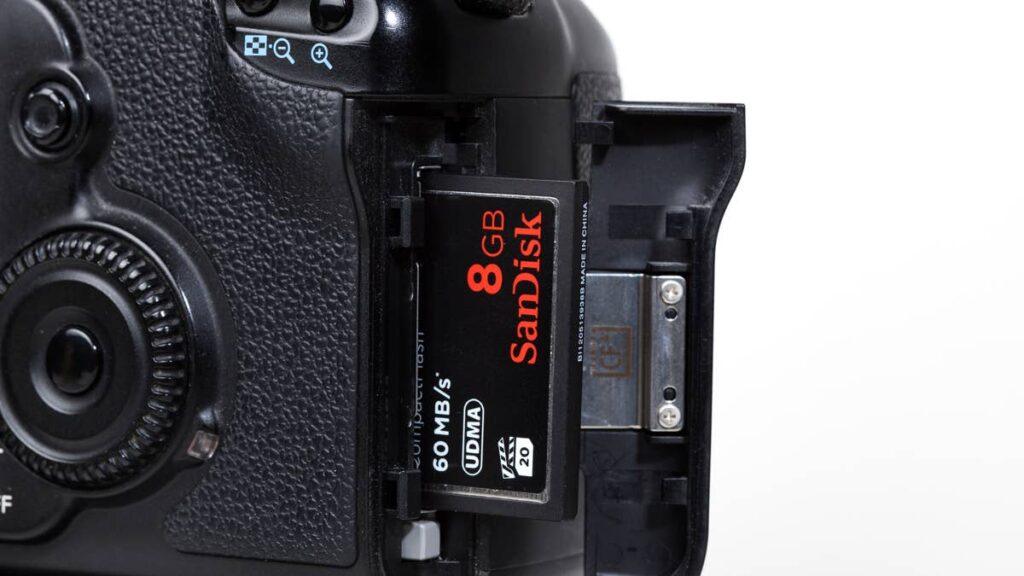
A memory card used to be the cheap add-on at the camera counter. That changed in a hurry. By April, popular memory cards and flash drives, including Sandisk models, typically cost more than double their 2025 lows, a Tom’s Hardware price check found.
Sandisk Corp. (SNDK), the name on many of those cards, is having a blockbuster year. Yet the shoppers who made the brand famous now bring in a shrinking slice of sales.
Sandisk’s consumer revenue fell 5% from a year earlier to $556 million in the quarter that ended July 3, 2026, its earnings release shows. That dip came even as its cards and drives got pricier in stores.
Everything else boomed. Total revenue jumped 372% to $8.97 billion, which cut consumer products’ share of sales to about 6%, from roughly 31% a year earlier.
Data centers and device makers drove that growth, and higher prices played a big part. About two-thirds of Sandisk’s gain over the previous quarter came from pricing, the company said. Chief Executive David Goeckeler said Sandisk had “established datacenter as a key growth pillar.”
Sandisk’s next chip could save cloud giants as much as several hundred billion dollars, according to a Goldman Sachs research note shared with TheStreet. Nothing in that math makes your next phone or memory card cheaper.
Analyst James Schneider wrote the research note, dated Monday, October 12, 2026. Its title: “High-performance NAND could help crumble the AI ‘memory wall’ while driving meaningful CapEx savings.” Goldman rates Sandisk a Buy with a $2,200 price target.
Also read: 5-star analyst resets Sandisk stock price target by $175
Sandisk wants to stack flash beside the processor
Chatbot chips run short of fast memory before they run out of muscle. Goldman says operators often buy extra processors for their memory, leaving costly computing power underused.
Sandisk and SK Hynix are developing High Bandwidth Flash, or HBF, to fix that. It stacks flash, the same basic material inside an SD card, beside the processor.
Citing Sandisk, Goldman says four processors with HBF could match the output of eight without it. The firm estimates the setup cuts the cost of answering requests by about 30%.
ollo / Getty Images
The catch is how much flash HBF swallows
HBF is greedy with factory space. Goldman assumes each HBF chip needs about 3.5 times the silicon of ordinary flash holding the same data.
In its bull case, half of the AI chips shipped in late 2028 would carry HBF. It would then make up under 4% of global flash output but use nearly 9% of flash factory capacity, the note estimates.
Goldman sees HBF “potentially extending the duration of the current cycle.” For shoppers, that cycle means pricier cards and drives. Silicon devoted to data center flash never becomes phone storage or memory cards.
Research firm IDC expects memory prices to continue rising until at least 2028, when supply should finally stabilise, according to its August smartphone forecast. Goldman’s bull case ramps HBF in the same timeframe.
IDC expects the average smartphone price to jump 27.6% this year to $581. IDC’s Francisco Jeronimo said consumers are starting “to pay the AI bill.”
For shoppers, cheap storage will not return on its own. Anyone waiting for prices to reset may wait until 2028 or later if IDC’s forecast is right. A successful HBF launch helps cloud budgets first.
Wall Street is bullish on Sandisk but far from unanimous
Sandisk carries a consensus Buy rating from 25 analysts, with an average price target of $2,173, according to StockAnalysis. Targets run from $1,000 to $3,600, showing how differently analysts judge this cycle’s length.
Mizuho’s Vijay Rakesh raised his target to $2,050 from $1,875 on Tuesday, October 6. Bernstein’s Mark Newman kept his $3,000 target on Monday, October 5.
Sandisk shares fell about 6% on 12 October, when the note was released. As of mid-October, StockAnalysis shows them still up roughly 800% over the past year.
The drop came during a memory selloff tied to AI financing worries and a chip advance from China’s ChangXin Memory Technologies, CNBC reported. ChangXin makes a different kind of memory than Sandisk, and UBP’s Vey-Sern Ling told CNBC that investors were looking for excuses to take profits.
More Bank Stock Resets:
- Goldman Sachs resets Nike stock price target after brand disappoints
- Morgan Stanley resets AMAT stock price target by $79
- Bank of America resets AMD price target after major milestone
Goldman thinks Sandisk’s HBF bet has room to run
Goldman favors Sandisk and SK Hynix for their HBF lead. Sandisk’s factory partnership with Kioxia Holdings keeps its capital spending low, the firm says.
The firm rates Micron Technology Inc. (MU) as Neutral, calling it a less direct winner given its DRAM focus. Goldman’s bull case puts the HBF market near $150 billion.
Goldman flags real risks. HBF responds far more slowly than the memory it supports, wears out under heavy writing and runs hot. Commercial samples are not expected until 2027, and Kioxia and Samsung Electronics are chasing rival designs.
For years, flash makers competed for phone and laptop orders, and prices kept falling. Now gadget makers are bidding against data centres for the same chips, and HBF would give data centres one more reason to outbid them.
More Stocks News
- Netflix’s content calendar, layoffs prompt harsh response from fund manager
- Cathie Wood buys $11.8 million of tumbling tech stock
- Netflix cut 1,000 jobs. Here’ why and how it impacts your subscription
- Warren Buffett endorses this Vanguard ETF for young investors