
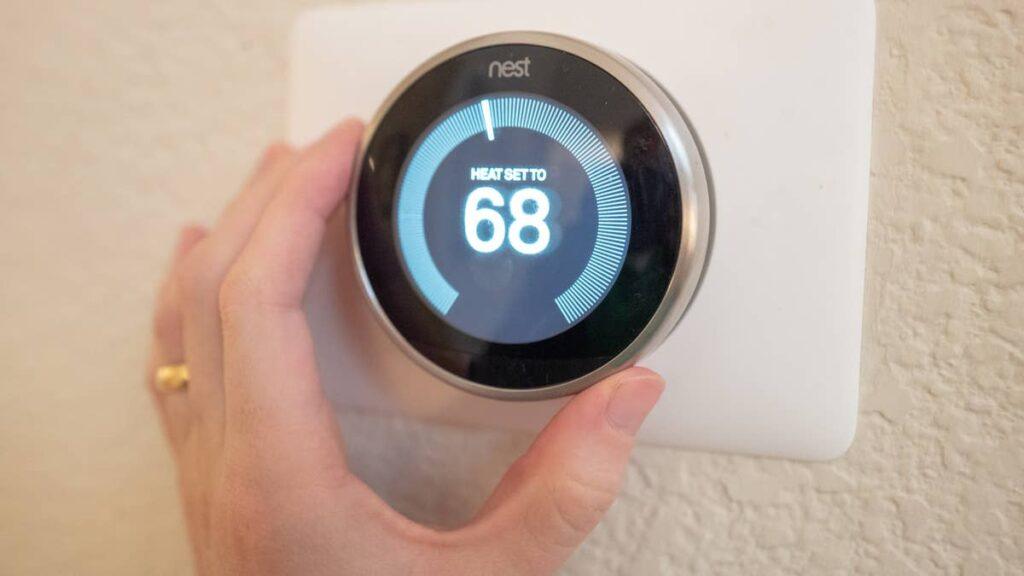
I live in the Northeast, and like millions of New Englanders, our family home relies on heating oil. Last week, our tank was filled, and the $1,200 price tag was jarring, particularly given that in the thick of winter we may need to fill it once every six weeks.
I’m not alone in feeling the price shock, given the just-released Consumer Price Index inflation report for September. The CPI report showed that prices across all items rose 3.7% year-over-year, driven in no small part by a massive 34% increase in gasoline and an eye-opening 74% year-over-year increase in fuel oil prices.
The pressure on consumers comes alongside sagging consumer sentiment ahead of a contentious mid-term election in November.
Higher prices burden consumer budgets
The increase in heating oil is truly staggering, and it will be felt. Overall, 4.79 million households used heating oil as the primary source of heat in 2023, the most recent statistic available from the U.S. Energy Information Administration (EIA), and about 82% those homes were in the Northeast.
The average fuel tank is 275 gallons, and according to the EIA, the average price per gallon in the U.S. for heating oil on October 12 is $6.14, suggesting a full tank will set the average person back $1,689.
That’s bad news, especially given that 43% of Americans cannot cover a $1,000 emergency expense and 32% have no emergency savings at all, according to Empower.
However, it’s not just fuel oil that’s costing us more.
Even after economists strip away volatile energy and food components, the so-called ‘core’ CPI rose 2.6%, above Wall Street expectations of 2.5% and up from 2.4% in August.
However, unlike economists, we don’t have the luxury of stripping out food and energy costs from our budgets. People need to eat, and they often need to drive to earn money to pay for groceries and keep their homes warm in winter.
The pain at the pump and at the furnace is a real cost, not a theory, and it’s already weighing on consumer sentiment, which has sagged over the past six months.
“On a six-month moving average basis, confidence across all age groups and nearly all income groups trended downward,” according to the Conference Board‘s Consumer Confidence Index.
Heating oil, gasoline prices driven by crude oil
Energy is the biggest driver of headline inflation, and the surge in energy prices is directly tied to the negative impact on oil supply from the conflict in the Middle East involving the U.S., Israel, and Iran.
Crude oil prices, as measured by West Texas Crude, have risen to $95 from below $60 per barrel this year. AAA reports that the price of a gallon of gasoline has climbed to $4.33 from $3.08 a year ago. Diesel prices are worse, clocking in at $6.30 per gallon, up from $3.66 last year.
Unfortunately, higher prices haven’t been offset by rising pay. Real wages, which subtract inflation from wage growth, have actually fallen.
“Real average hourly earnings for all employees decreased 0.5 percent from August to September, seasonally adjusted,” reported the U.S. Bureau of Labor Statistics. “From September 2025 to September 2026, real average hourly earnings decreased 0.7 percent, seasonally adjusted.”
Smith Collection/Gado / Getty Images
Not much good news on the inflation and borrowing front
Oil supply disruption in the Middle East is due to limited tanker traffic through the Strait of Hormuz, which has historically carried 20% of the world’s oil supply.
There’s little sign that tensions are easing overseas, and absent a major breakthrough, price relief isn’t likely.
More price pressure, particularly on fuel oil, is likely, given seasonality. And unlike gasoline, which has a cost spread over time, fuel oil bills can quickly deplete emergency savings. Historically, heating oil costs rise alongside winter demand, suggesting we haven’t yet seen their peak.
“Fuel spending is set to rise the most for homes that primarily use heating oil,” wrote the EIA in an October short-term energy forecast report. “These homes face heating oil prices that are up more than 30% from last winter, although we expect heating oil expenditures to increase by 21%, offset by a milder winter this year in the Northeast.
NEADA is targeting a 50% increase in heating bills for those heating with oil this season, for an estimated total of $2,627. Only a few weeks ago, it was predicting a 31% increase, but that was forced higher by the recent price surge.
“Winter is almost here, and families have very little time to prepare,” said NEADA Executive Director Mark Wolfe.
More Economy News
- Michael Burry just made another bold move on Wall Street
- UBS resets Microsoft stock price target for investors
- Vanguard economist says sticky inflation will test your patience
- U.S. government warns of new travel ban for Americans