
The US dollar held firm on Tuesday as markets continued to price in a more hawkish Federal Reserve, while the Japanese yen hovered near a multi-decade low and the Indian rupee opened on a flat note against the greenback.
The dollar remained supported even as oil prices edged lower on easing Gulf tensions.
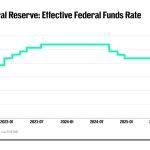
Traders largely focused on rising US Treasury yields and growing expectations that the Federal Reserve could tighten policy later this year.
That kept the greenback broadly firm across major currencies.
The Indian rupee opened little changed against the US dollar on Tuesday.
The USD/INR pair held near Monday’s gains around 94.70 and was expected to trade in a narrow range.
A firm US dollar, backed by stronger hawkish Federal Reserve bets, capped any upside for the rupee.
At the same time, softer oil prices, helped by progress in the US-Iran peace deal, were seen limiting the rupee’s downside.
Hawkish Fed bets support the dollar
US Treasury yields stayed elevated after rising sharply in the previous session.
Yields on interest-rate-sensitive two-year notes hovered near a 16-month high as traders positioned for the possibility of rate hikes later this year.
Fed funds futures are now pricing in a 75% probability of a rate hike by September.
BofA Global Research and Deutsche Bank have also dropped their earlier forecasts for steady policy and now expect the Fed to raise rates within the year, citing continued economic resilience.
The dollar index, which tracks the greenback against a basket of major currencies including the euro and the yen, was marginally higher at 101.06.
That kept it close to last week’s one-year high of 101.12.
Euro, pound, and major currencies under pressure
The euro was last trading at $1.1422, staying near a three-month low after European Central Bank President Christine Lagarde played down second-round inflation concerns.
Sterling traded at $1.3234 and was broadly steady after British Prime Minister Keir Starmer resigned, paving the way for what the draft described as an orderly transfer of power.
Among risk-sensitive currencies, the Australian dollar fell 0.5% to $0.6966, its weakest level since early April.
The New Zealand dollar also weakened, falling around $0.5693.
Lower oil prices offer some relief
Oil prices extended losses from the previous session as markets tracked progress in US-Iran peace talks.
Investors were also waiting for clearer signs of a resumption in crude flows through the Strait of Hormuz.
For the rupee, lower crude prices offered some relief.
However, that support was offset by broad US dollar strength and expectations of tighter US monetary policy.
Yen nears key intervention level
The Japanese yen remained under pressure and was last trading at 161.62 per dollar after briefly weakening to 161.93 late on Monday.
A move above 161.96 would push the currency to its weakest level since 1986.
On Monday, Japanese Finance Minister Satsuki Katayama held an online meeting with US Treasury Secretary Scott Bessent.
The discussion reportedly centred on policy responses to the yen’s historic weakness, including the possibility of currency intervention.
Japanese authorities have so far offered no clear signal on whether they will step into the market, keeping traders on alert.
The post Dollar stays firm, oil falls as markets focus on Fed policy outlook appeared first on Invezz