
George Soros is the man behind the famous ‘Black Wednesday’ on Sep. 16 1992. On that day, his Quantum Fund ‘broke the Bank of England’ with a $1 billion short on the British pound.
His other notable market moves include building short positions against the Thai baht during the 1997 Asian financial crisis and the Japanese yen in 2013 and 2014.
George has built his career on identifying when markets are wrong about something fundamental and betting heavily when conviction is high.
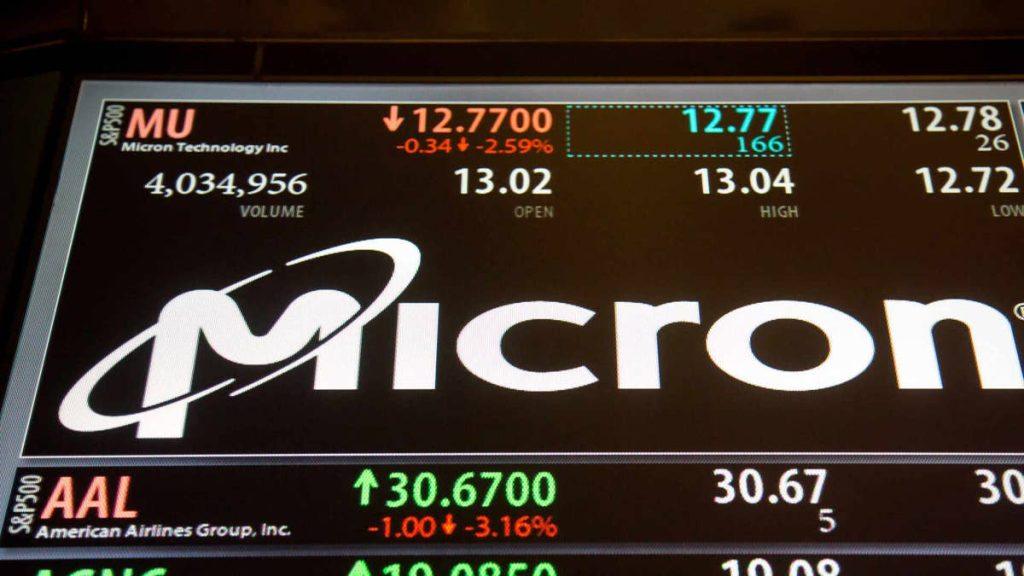
Soros Fund Management, based in New York and run by George Soros, filed its Q2 13F report on Aug. 14, 2026, and increased its Micron Technology (MU) stake to 22,422 shares (worth $25,881,490) from 2,824 shares in Q1 fiscal 2026 ($954,060).
That’s a $24.9 million increase, or rather, a 7.9x increase. This reveals how strongly he is building conviction in AI memory.
According to WhaleWisdom, the fund’s Q2 13F included $8.14 billion in managed 13F securities with Amazon as the largest holding, followed by TSM and then GOOGL.
MU trades near $940.76 as of writing, down from its all-time high of $1,255.00 reached on June 25, according to Yahoo Finance. The stock is still up 229.81% year-to-date and the fourth-best S&P 500 performer, according to Slickcharts data, trailing only SanDisk, Moderna, and Dell.
I know you’re wondering how that is for Moderna. Moderna just arrived at this spot. How? Due to groundbreaking late-stage clinical results for its personalized mRNA skin cancer vaccine (co-developed with Merck) and regulatory wins, FDA advisory support.
Also Read: Micron Technology Inc. Latest News and Stories
13F reveals Soros going against the crowd on Micron
I think what makes the Soros move interesting is not the size but the direction. It’s against a tide of institutional selling from some of the most respected funds in the market.
A compiled report by Seeking Alpha shows Renaissance Technologies slashed its MU holding to 211,600 shares from 2.16 million in Q1. Bridgewater cut from 1.48 million to 116,700 shares. Appaloosa reduced from 1.67 million to 980,000 shares. Duquesne exited a 23,000-share position entirely. Kerrisdale liquidated. Discovery Capital reduced shares to just 1,000.
More Micron:
- Micron stock draws aggressive target reset from 5-star analyst
- Micron gets aggressive stock price target from veteran analyst
- Roundhill CEO spots major shift for Micron stock
- How many employees does Micron have in 2026? Its workforce, locations, and layoffs explained
Against that wave of selling, Soros increased his position more than sevenfold. Altimeter Capital opened a new 210,000-share stake. Coatue Management also boosted its MU position.
Soros’s investment philosophy, which he calls reflexivity, holds that market participant biases change economic realities in ways that create self-reinforcing cycles.
His framework is built on identifying when the consensus is wrong about an underlying trend. The institutional selling in Q2, driven by Micron’s decline from its June 25 all-time high, appears to be the kind of consensus pessimism Soros historically fades.
Here is Micron’s business case behind Soros’s conviction
Soros is buying a business that reported the most extraordinary quarter in its 47-year history on June 24, 2026.
As reported in several of my previous coverages on Micron, it has recorded its most extraordinary Fiscal Q3 2026 results.
- Revenue reached $41.46 billion, compared to $9.30 billion in the same quarter a year ago.
- GAAP net income was $28.24 billion, or $24.67 per diluted share.
- Operating cash flow was $25.39 billion.
- HBM4 entered high-volume shipments for the lead customer platform.
- Q4 fiscal 2026, Micron guided $50 billion in revenue, 86% gross margins, and non-GAAP EPS of $31.00.
- Source: Micron Technology, Inc. Third Quarter Fiscal 2026 Results
“Micron’s record fiscal Q3 financial results and even stronger outlook for Q4 reflect the strategic value of memory in the AI era,” said CEO Sanjay Mehrotra in the earnings release.
“We believe our multi-year Strategic Customer Agreements will significantly enhance the durability and predictability of Micron’s strong financial performance.”
The structural argument behind those results is the same one I have covered throughout 2026: HBM is sold out through 2027, AI data centers are consuming 70% of global memory chip production, hyperscalers have committed $22 billion in advance cash deposits to secure supply, and the only U.S.-based manufacturer of advanced memory is Micron.
Bloomberg via Getty Images
Why Soros’s approach makes the Micron move credible as a macro call
Soros is not a bottom-up stock picker. His firm builds positions based on macroeconomic trends and policy dynamics, making large concentrated bets when conviction is high and cutting losses quickly when the thesis breaks.
The AI infrastructure buildout is exactly the kind of structural, policy-driven demand surge that Soros’s framework is designed to identify.
Governments worldwide are subsidizing semiconductor manufacturing. Hyperscalers are committing multi-year capital expenditure plans that cannot be easily reversed.
Related: Billionaire George Soros buys $137M in AI chips, trims Alphabet
The supply shortage in advanced memory is not a quarterly aberration. I term it the consequence of a decade of underinvestment, followed by a sudden vertical surge in demand.
From Soros’s perspective, the reflexivity argument runs as follows: AI enthusiasm drives hyperscaler capex commitments, which drive memory demand, which drives Micron earnings, which attracts more AI investment, which drives more demand.
The cycle is self-reinforcing until something breaks it. His Q2 filing suggests he does not yet see what breaks it.
In fact, Micron’s 662.66% one-year return and 229.81% year-to-date gain prove the market has already repriced the memory cycle substantially. And the stake Soros added is a bet that the repricing is not yet complete.
Related: Stanley Druckenmiller builds $120 million bet on major tech stock