
The hardest time to buy a stock is after it has already made everyone else money. You see the chart, you feel late, and you wonder whether the easy gains are gone.
The hardest time to hold one is the same moment. If you rode a stock up, every headline starts to feel like a reason to lock in the win before it slips away.
Both instincts come from the same place. Nobody wants to be the last buyer at the top or the seller who bailed right before the next leg higher. A scheduled company event, with a date circled on everyone’s calendar, can make either mistake feel urgent.
That’s why investor days matter more than they sound. Companies use them to reset long-term targets and expectations for years at a time, and one carefully staged presentation can decide whether a hot stock keeps running or takes a breather.
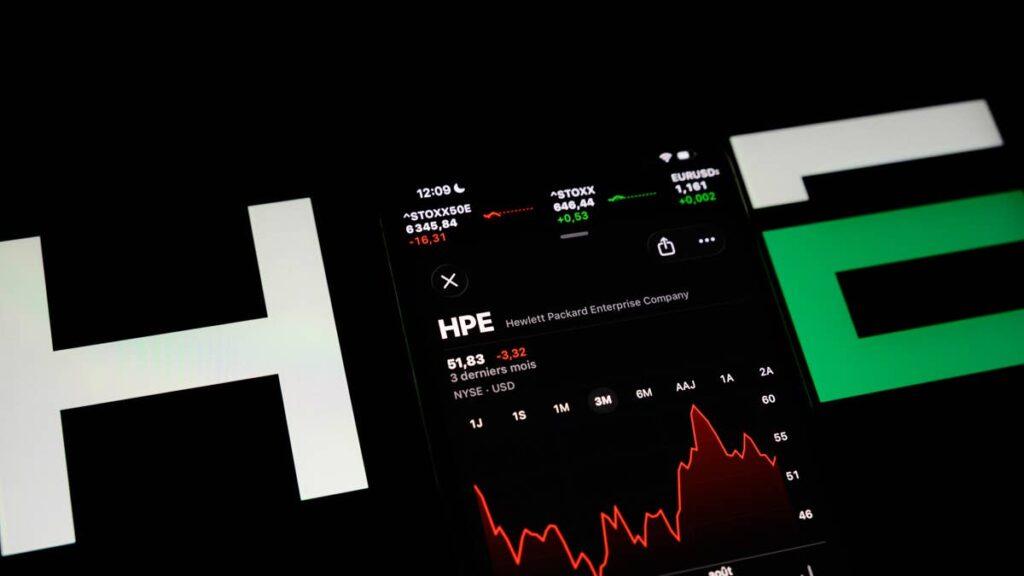
Hewlett Packard Enterprise (HPE) holds exactly that kind of event on Sept. 30, after shares more than doubled this year. Bank of America says it’s still a buy, which matters whether you’re chasing the rally or sitting on gains.
How Juniper deal turned HPE into an AI networking play
HPE closed its roughly $14 billion purchase of Juniper Networks in July 2025. That deal turned networking into the company’s fastest-growing business, just as AI data centers started demanding faster connections among chips, servers, and sites.
The payoff showed up in the fiscal third quarter. Revenue rose 34% to $12.2 billion, and networking revenue jumped 74.9% to $2.9 billion with a 22% operating margin, according to HPE’s earnings release. Much of that networking jump reflects a full quarter of Juniper versus a partial one a year earlier.
Related: Hewlett Packard Enterprise Co. Q3 2026 Earnings: Recap of $HPE Earnings Call, Forecast
“Our results demonstrate the durability of our profitable growth momentum,” CEO Antonio Neri said in the release. HPE also expanded a deal to supply Juniper networking gear for Oracle’s AI infrastructure.
Management then raised the bar for next year. HPE guided to fiscal 2027 revenue growth of 13% to 17%, adjusted EPS growth of 16% to 20%, and at least $5 billion in free cash flow, Yahoo Finance reported.
NurPhoto / Getty Images
Bank of America sees 40% upside ahead of Sept. 30 investor day
BofA Securities analyst Wamsi Mohan reiterated his buy rating and $88 price target in a Sept. 27 note shared with TheStreet. That sits about 40% above the $62.94 reference price in the report.
Mohan expects Executive VP of HPE Networking Rami Rahim to cover four topics on Sept. 30, according to the note:
- A higher estimate of the total networking market HPE can sell into
- A financial update on AMD’s Helios AI rack opportunity
- Progress on integrating Juniper
- The opportunity with Oracle, which likely uses HPE’s routers and data center switches
Helios is the one to watch. HPE can sell just the Ethernet switch inside AMD’s Helios racks, or build the full rack with servers and networking, BofA said.
BofA sizes that opportunity from a few hundred million dollars for switches alone to several billion dollars over time for full racks. The firm also warned that a lack of Helios financial detail could pressure the stock near term.
The bigger picture is market growth. BofA now expects the data center networking market to grow about 40% a year through 2030, up from the 15% HPE cited at its 2025 analyst day, and sees HPE’s networking revenue compounding at 15% to 20% a year.
The cash flow dip hiding in BofA’s forecast
The headline numbers look great, but I found a wrinkle deeper in BofA’s model. Free cash flow climbs from $3.8 billion in fiscal 2026 to $5.4 billion in fiscal 2027, then drops to about $2.75 billion in fiscal 2028.
Capital spending drives the swing. BofA models capex rising to $5.9 billion in fiscal 2027 and $6.8 billion in fiscal 2028, from $1.9 billion in fiscal 2025.
More Wall Street:
- Piper Sandler revamps Meta stock price target after cutting it 3 weeks ago
- Jim Cramer drops another stock market warning
- Palantir’s CEO just sent a message Silicon Valley won’t ignore
BofA’s earnings path is also more cautious than HPE’s. The firm projects adjusted EPS of $4.40 in fiscal 2027, up 14.9%, below both the company’s 16% to 20% growth guide and the $4.60 Bloomberg consensus in the note.
In my analysis, that gap is the real test for Sept. 30. If management can show AI networking growth that justifies heavier spending, BofA’s conservative model leaves room for upside. If not, the capex bill arrives before the payoff.
Why some analysts think the HPE rally has run far enough
Not everyone is buying at these levels. Evercore ISI cut HPE to in line from outperform on Sept. 14, keeping a $65 target and citing fewer near-term catalysts after the stock’s run, Investing.com reported.
The stock fell nearly 11% on Sept. 14 after Evercore ISI downgraded it to In-Line, its worst day in more than a year, according to Yahoo Finance. Shares closed at $61.49 on Sept. 29, still up more than 150% for the year, based on StockAnalysis data.
BofA’s $88 target equals 20 times its calendar 2027 earnings estimate of $4.49. That’s well above the nine-times median of HPE’s historical range, which BofA justifies with a better growth profile and rising free cash flow.
What HPE’s investor day reveal means for your portfolio
If you bought HPE earlier this year, you may be holding a much bigger position than you planned. Rebalancing back to your target weight locks in part of the gain without betting everything on one presentation.
If you’re thinking about buying, remember that HPE isn’t an income play. BofA models the dividend flat at 57 cents a share through fiscal 2028, a yield under one percent, and no share buybacks in its forecast.
BofA’s downside risks include an economic slowdown, component shortages, aggressive server pricing from rivals, and execution problems with the Juniper integration. The webcast starts at 10:30 a.m. Central on Sept. 30, and the replay stays online for about a year, according to HPE.
Hot stocks reward conviction, but they punish oversized bets. Decide how much HPE you can hold through a bad day before the webcast, not after.
Related: Oracle’s $664 billion backlog sends a signal to Dell, HPE